Damn, three large downloads, one hour of wasted time, and my HP Deskjet 3820 still doesn't print thanks to the geniuses at HP who cannot even provide a working driver installation package. The first setup wizard crashes after 10% of unpacking, the second one won't find a DLL function entry point and terminates, and the third one displays an empty frame on my desktop, and that's about it. Go and throw your files and your driver.ini into a zip, would you? I don't need your flashy installer anyway.
Update: Cool, one of the crashing HP driver setup wizards did exactly that - left the driver files laying around in it's working directory. That's what I call customer service. Thank you, HP!
Reminder: Always keep driver CD.

Saturday, May 21, 2005
Friday, May 06, 2005
Don't Surrender To The Technology Pipers
Over and over again non-technical decision makers have screwed up software-projects by blindly following pied pipers propagating their inappropriate technologies. Only in conjunction the clueless suit and the shallow wannabe-techie unfold their destructive powers.
Today, many IT middle and upper management positions are staffed with folks who are technological dinosaurs (the last time they coded was in Basic at highschool, before they stepped out of comp-sci classes when they didn't quite grasp the concept of pointers). Their cluelessness then opens the doors for semi-educated people in the lower ranks, who spent 10 years at college campus playing multiuser dungeon games or others who just went through the federal employment offices' "Becoming a webdesigner in four weeks"-training.
Especially in large corporations this kind of host/parasite-relation happens quite frequently. Some of the species you might encounter:
Framework Astronauts
Here we talk about folks who spend most of their time building application frameworks, that no one on this planet asked for. But that doesn't really matter - the astronaut's goal is to play around with technology, not to produce a valuable product. And without any actual application depending on the framework, there is also no need to maintain backward compatibility, so all the old programming interfaces can be thrown over board each time the astronaut wants to try something new.
Bullshit Pipers
Those people just unload all the latest tech terms on their CEOs, who in change will surrender to the piper's technical superiority. Truth is, the piper has no clue either, most of all he has no practical experience, and he also won't bother to consider the project requirements, as this might make his favorite technology look inappropriate (which it is, of course).
Not-Invented-Here Pilots
They will re-invent the wheel, and write their own database engines, XML-parsers and workflow systems - briefly everything that has been done before by more qualified people, as long as they don't have to work on their real task, namely implementing application logic. My favorite example: proprietary object/relational mappers - right, after all there are no commercial or open source O/R mappers out there, so the only way is to ramp it up on their own.
Some real-life experiences:
A cobbler should stick to his last. I don't pretend to know about networking, so I will not tell our network folks how to configure our routers. And that's why MCSEs should not design software architecture, webdesigners had better leave their hands off enterprise application integration, why Visual Basic programmers can't just switch over to Embedded C++ in a week, and why college hackers might better not single-handedly build up the corporate system infrastructure.
If you want more proof, have a look at The Daily WTF - Curious Perversions In Information Technology. Those things happen each day (believe me, I have seen it) - at a software company close to you.
Today, many IT middle and upper management positions are staffed with folks who are technological dinosaurs (the last time they coded was in Basic at highschool, before they stepped out of comp-sci classes when they didn't quite grasp the concept of pointers). Their cluelessness then opens the doors for semi-educated people in the lower ranks, who spent 10 years at college campus playing multiuser dungeon games or others who just went through the federal employment offices' "Becoming a webdesigner in four weeks"-training.
Especially in large corporations this kind of host/parasite-relation happens quite frequently. Some of the species you might encounter:
Framework Astronauts
Here we talk about folks who spend most of their time building application frameworks, that no one on this planet asked for. But that doesn't really matter - the astronaut's goal is to play around with technology, not to produce a valuable product. And without any actual application depending on the framework, there is also no need to maintain backward compatibility, so all the old programming interfaces can be thrown over board each time the astronaut wants to try something new.
Bullshit Pipers
Those people just unload all the latest tech terms on their CEOs, who in change will surrender to the piper's technical superiority. Truth is, the piper has no clue either, most of all he has no practical experience, and he also won't bother to consider the project requirements, as this might make his favorite technology look inappropriate (which it is, of course).
Not-Invented-Here Pilots
They will re-invent the wheel, and write their own database engines, XML-parsers and workflow systems - briefly everything that has been done before by more qualified people, as long as they don't have to work on their real task, namely implementing application logic. My favorite example: proprietary object/relational mappers - right, after all there are no commercial or open source O/R mappers out there, so the only way is to ramp it up on their own.
Some real-life experiences:
- The consultant who used webservices in every scenario (even for downloading binary data), and designed all of them with the same method signature (input: string, output: string). So much about "service-oriented architecture".
- The integration specialist who parsed huge XML chunks by applying DOM (which loads the whole XML structure into one big in-memory tree), instead of SAX (which is stream-oriented / event-triggered). Of course he found out too late (after deployment on the production servers), so he recommended to split large input-files into several smaller ones each time.
- The self-proclaimed Java architect, who wasted his customer's money by implementing his own (erroneous) HTTP-protocol and XML-parser (which of course exist already as part of the JDK), and managed to deliver a Java application which was not able to handle unicode.
- The programmer who explained that Visual Basic 6 had garbage collection (hint: that's reference counting, not garbage collection, dude).
- The webdesigner who insisted that the casing of his filenames were not important on a Solaris webserver (yes, he came from the Windows world).
- The guy who hand-coded his XSD- and WSDL-files, disregarding the actual implementation, or even broke XML schema syntax rules. Design by (service) contract, anybody?
A cobbler should stick to his last. I don't pretend to know about networking, so I will not tell our network folks how to configure our routers. And that's why MCSEs should not design software architecture, webdesigners had better leave their hands off enterprise application integration, why Visual Basic programmers can't just switch over to Embedded C++ in a week, and why college hackers might better not single-handedly build up the corporate system infrastructure.
If you want more proof, have a look at The Daily WTF - Curious Perversions In Information Technology. Those things happen each day (believe me, I have seen it) - at a software company close to you.
Wednesday, April 27, 2005
Retro Computing: Some Things Just Never Change
Me, in front of my Commodore 128D (1986):

Me, in front of my Commodore 128D (2005):


Me, in front of my Commodore 128D (2005):

Saturday, April 16, 2005
Retro Computing: The Best Joystick Of All Times
Uhhh, I was extremely lucky. Chances were minimal, but I found Suzo's "The Arcade" joystick for 8/16-bit homecomputers on eBay Netherlands. Even better, this turned out to be a "Buy it now"-offer - there was no hesitation for me.
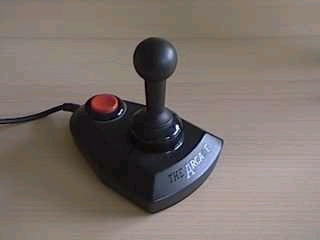
The Arcade was by far not as common as the Quickshot II or the Competition Pro, but there is no other design that fits as comfortably in the palm of my hand. All microswitches, of course. I just spent half an hour playing Soccer II on my C64 using another ancient joystick model, and I constantly hit a misplaced fire button, plus my hand started hurting within minutes.
I can't wait to plug in the Arcade again.
The Arcade was by far not as common as the Quickshot II or the Competition Pro, but there is no other design that fits as comfortably in the palm of my hand. All microswitches, of course. I just spent half an hour playing Soccer II on my C64 using another ancient joystick model, and I constantly hit a misplaced fire button, plus my hand started hurting within minutes.
I can't wait to plug in the Arcade again.
Friday, April 15, 2005
Weirdoz.Org Visual Chat Up And Running Again
Just a short note that the folks at weirdoz.org got their Visual Chat system up and running again.

I developed Visual Chat about eight years ago - those were the days of JDK1.1, Netscape 4.0 and MSIE 4.0 - so please overlook the client's obvious weaknesses. weirdoz.org is now the longest running Visual Chat installation - since 1999 about 300.000 users have signed up.

I developed Visual Chat about eight years ago - those were the days of JDK1.1, Netscape 4.0 and MSIE 4.0 - so please overlook the client's obvious weaknesses. weirdoz.org is now the longest running Visual Chat installation - since 1999 about 300.000 users have signed up.
Wednesday, April 13, 2005
Arno's Software Development Bookshelf
This part of my bookshelf (see below) is all about software development and the software industry. It is slowly starting to outgrow the shelf-space I originally had reserved. I am particularly interested in object oriented design / development (mainly in C++, Java and C#/.NET), application servers, database systems, graphical user interfaces (thin clients and rich clients) and software project management in general. Another fascinating area is the microcomputer revolution, and the history and the legends of silicon valley.
On the other hand, I also try to build up a basic level of knowledge in areas outside my expertise - e.g. I didn't have a a lot of idea about networking in general (one course at university and my little peer-to-peer home LAN just wasn't not enough, and at work networking has always been outside the scope of my tasks). Severals books later I now have something like a global impression of what it is all about (suffice to say that more practical experience is still missing). Same is true for electronics, image editing, game programming, and so on...
Please click on the image in order to zoom in. Some of those books are also listed here, resp. on my Amazon Listmania Lists.
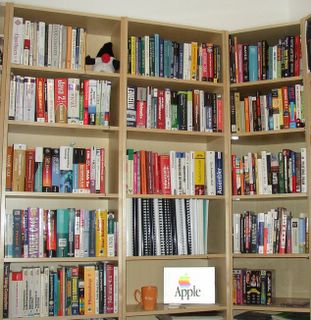
This reminds me that I have to urge some folks to return the following items:
On the other hand, I also try to build up a basic level of knowledge in areas outside my expertise - e.g. I didn't have a a lot of idea about networking in general (one course at university and my little peer-to-peer home LAN just wasn't not enough, and at work networking has always been outside the scope of my tasks). Severals books later I now have something like a global impression of what it is all about (suffice to say that more practical experience is still missing). Same is true for electronics, image editing, game programming, and so on...
Please click on the image in order to zoom in. Some of those books are also listed here, resp. on my Amazon Listmania Lists.
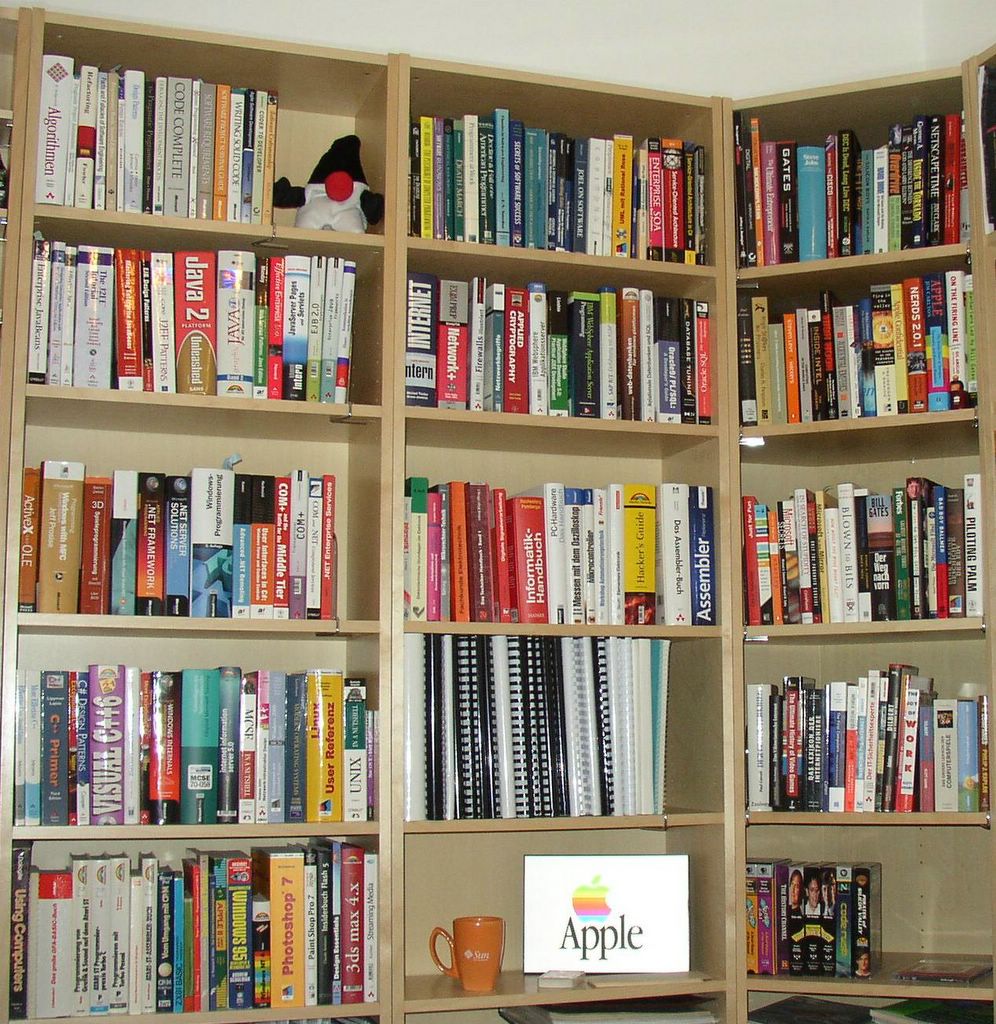
This reminds me that I have to urge some folks to return the following items:
- Harry, I wonder if you will ever finish reading "The Home Computer Wars: An Insider's Account of Commodore and Jack Tramiel". ;-)
- Tommy, who used to work for Xerox in the mid-80s, which is why he was interested in "Dealers of Lightning: Xerox PARC and the Dawn of the Computer Age" and several books about the history of IBM.
- Christoph, who joined my project-team lately, and has a pile of my .NET books and "Professional SQL Server 2000 Programming" lying on his desk - nevermind Christoph, keep them!
- Wolfgang, who wanted to know "Who Says Elephants Can't Dance?".
- Peter, my ally in investigating Apple's share of the "Revolution in The Valley".
Sunday, April 10, 2005
Popular Electronics / January 1975 Edition
Please don't tell anybody [;-)]- but I am currently bidding for an original Popular Electronics January 1975 Edition on eBay.

Yes, that's the one where MITS announced the Altair 8800, the one issue that Paul Allen happened to notice at a local newsstand on Harvard Square, Cambridge (Allen was working for Honeywell in nearby Boston at that time). He bought it and showed to Bill Gates at his friend's dorm room. "It [the PC revolution] is going to happen", Gates knew. Here was their opportunity to do something with Basic...

Yes, that's the one where MITS announced the Altair 8800, the one issue that Paul Allen happened to notice at a local newsstand on Harvard Square, Cambridge (Allen was working for Honeywell in nearby Boston at that time). He bought it and showed to Bill Gates at his friend's dorm room. "It [the PC revolution] is going to happen", Gates knew. Here was their opportunity to do something with Basic...
Tuesday, April 05, 2005
My Computer Museum (Update)
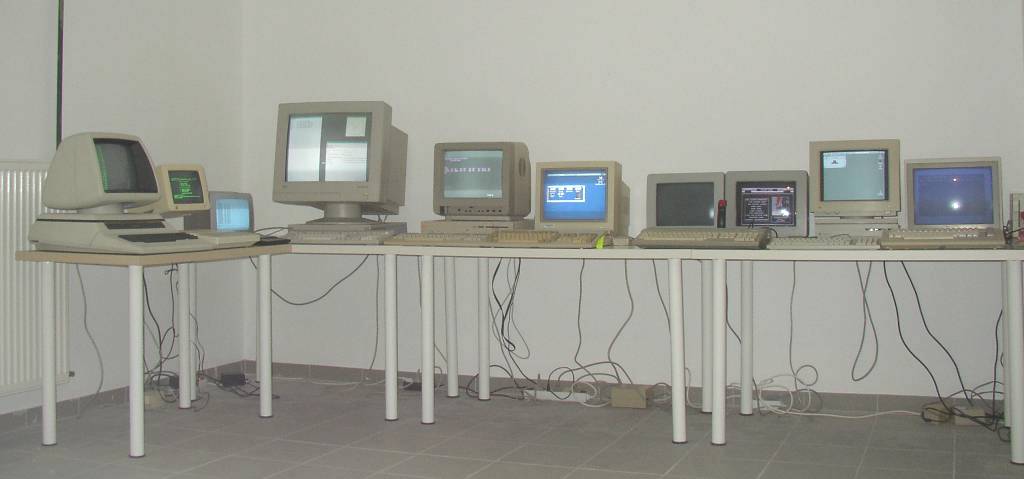
From left to right:
(1) Commodore CBM8032
(2) Apple IIc, Apple II Green Composite Monitor
(3) Sinclair ZX81, B+W TV Set
(4) Sun SparcStation 5, NEC 21" VGA Monitor
(5) Commodore 128D, Commodore 1901 Color Monitor
(6) Commodore Amiga 500, Commodore 1085S Color Monitor
(7) Atari 1040ST, Atari SM124 Monochrome Monitor, Atari SC1224 Color Monitor
(8) Apple Macintosh LC, Apple Monochrome Monitor
(9) Commodore 64, Commodore 1541 Floppy Drive, Commodore 1081 Color Monitor
Latest Purchases:
(1) Apple IIc, Apple II Green Composite Monitor
(2) B+W TV Set for Sinclair ZX81
Currently looking for:
(1) Tape Recorder for Sinclair ZX81
Sunday, April 03, 2005
Retro-Computing: International Soccer On The Commodore 64
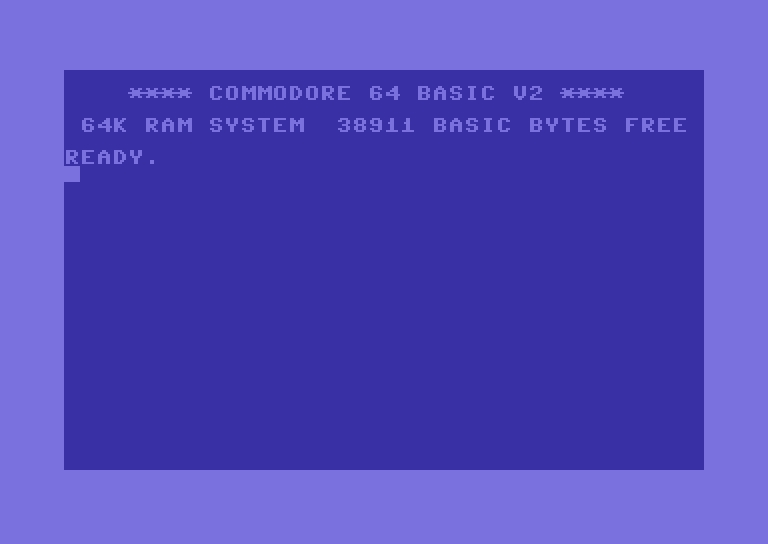
So I connected my Commodore 1541 floppy drive to my PC's LPT1 port using a XM1541 cable and invoked a transfer program called Star Commander, just to find out that Windows 2000's pre-emptive multitasking and asynchronous I/O just won't allow for the kind of synchronous control required to read from and write to the old 1541 drive. Star Commander even ships with an additional I/O driver for this scenario, but still it just didn't work. I had to switch back to DOS (now, this is one thing DOS is definitely doing a better job in), and voila - no timeouts any more.

Besides getting more or less every ancient program floating around on the internet onto my C64, I can as well transfer data from my old C64 disks to my PC, and run it in any C64 emulator, e.g. VICE. Also, most of my friends did not really keep their Commodores for the last 18+ years, so I can provide them with images of their old C64 disks for usage within their favorite emulator.
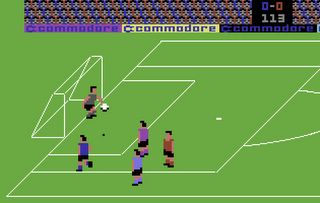
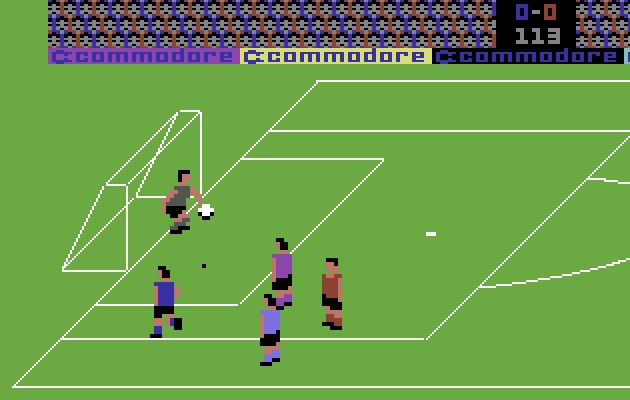
After Friday's Speedball session, I simply had to try Commodore International Soccer. Have a look, and don't tell me this doesn't beat EA Sports FIFA 2005 by far!

Besides getting more or less every ancient program floating around on the internet onto my C64, I can as well transfer data from my old C64 disks to my PC, and run it in any C64 emulator, e.g. VICE. Also, most of my friends did not really keep their Commodores for the last 18+ years, so I can provide them with images of their old C64 disks for usage within their favorite emulator.
After Friday's Speedball session, I simply had to try Commodore International Soccer. Have a look, and don't tell me this doesn't beat EA Sports FIFA 2005 by far!

Friday, April 01, 2005
Retro-Computing: Speedball On The Atari ST
After plugging in my brand-new (or actually nor-so-brand-new) Atari SC1224 Monitor, there was just one and only one adequate game for re-inaugurating my Atari 1040ST: Speedball (by the Bitmap Brothers).

A highschool-friend of mine and me used to play this for endless hours, and - after years of practicing - we achieved something like mastery.

Today, more than 15 years later (OK, admitted, I also played it once or twice on PaCifiST, another Atari ST emulator on the PC - but hey, this wasn't quite the same), I reached knockout round 8 out of 10 in my first Speedball tournament. Gee, I need to train harder! And I want my old Arcade Joystick back!

A highschool-friend of mine and me used to play this for endless hours, and - after years of practicing - we achieved something like mastery.

Today, more than 15 years later (OK, admitted, I also played it once or twice on PaCifiST, another Atari ST emulator on the PC - but hey, this wasn't quite the same), I reached knockout round 8 out of 10 in my first Speedball tournament. Gee, I need to train harder! And I want my old Arcade Joystick back!
Thursday, March 24, 2005
Wednesday, March 23, 2005
My Computer Museum (Update)
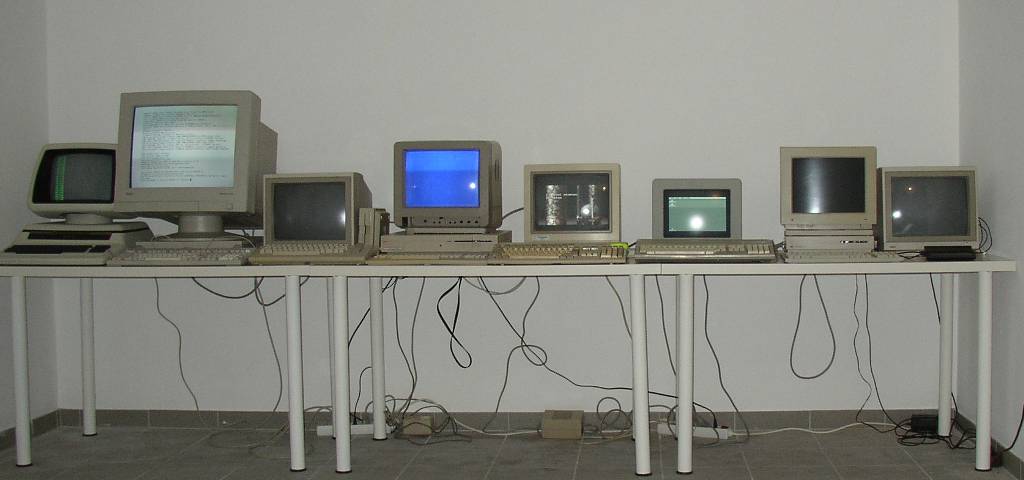
From left to right:
(1) Commodore CBM8032
(2) Sun SparcStation 5, NEC 21" VGA Monitor
(3) Commodore 64, Commodore 1541 Floppy Drive, Commodore 1081 Color Monitor
(4) Commodore 128D, Commodore 1901 Color Monitor
(5) Commodore Amiga 500, Commodore 1085S Color Monitor
(6) Atari 1040ST, Atari SM124 Monochrome Monitor
(7) Apple Macintosh LC, Apple Monochrome Monitor
(8) Sinclair ZX81, Commodore 1084 Color Monitor
Latest Purchases:
(1) Atari SC1224 Color Monitor
Currently looking for:
(1) Apple II
(2) TV set for connecting the Sinclair ZX81
(3) Some more power cables
The Mac LC is booting, but is missing its mouse right now (luckily the original contributor found it in the meantime). And I am still looking for a small TV set for the Sinclair ZX81 (the ZX81 has a built-in TV modulator, and a TV-out connector only - though it is possible to grab the original video signal directly from the board, this seems too risky for me as I am not a hardware expert at all, and I am afraid to blow up the board when trying).
My Sun SparcStation is currently running OpenBSD, but I consider switching over to Solaris.
Did I mention that I was out-bid ONCE AGAIN on eBay for an Apple IIc? What's wrong? Everyone seems to go crazy for the Apple II right now.
Thursday, March 17, 2005
Falling Asleep While Playing Halo 2
Hilarious video about a guy who fell asleep during a Halo 2 deathmatch and started snoring into his headset. As he wouldn't wake up, his playing partners decided to - well - abuse him a little bit.






Wednesday, March 16, 2005
Skunkworks Project At Apple
Ron Avitzur tells the incredible story of where the Macintosh Graphing Calculator comes from:
"I used to be a contractor for Apple, working on a secret project. Unfortunately, the computer we were building never saw the light of day. The project was so plagued by politics and ego that when the engineers requested technical oversight, our manager hired a psychologist instead. In August 1993, the project was canceled. A year of my work evaporated, my contract ended, and I was unemployed.
I was frustrated by all the wasted effort, so I decided to uncancel my small part of the project. I had been paid to do a job, and I wanted to finish it. My electronic badge still opened Apple's doors, so I just kept showing up."

Isn't this how most great software is being done? Not by design committees, not by a large corporate programming staff, but by a small group of talented and dedicated and slightly crazy people. This is how Bill Gates and Paul Allen developed their Altair Basic on Harvard University's DEC PDP-10 in 1975, or how Bud Tribble, Bill Atkinson and Andy Hertzfeld built the original Mac OS under Steve Jobs' pirate flag at Apple, or how Eric Bina and Marc Andreessen created NCSA's Mosaic browser.
"I used to be a contractor for Apple, working on a secret project. Unfortunately, the computer we were building never saw the light of day. The project was so plagued by politics and ego that when the engineers requested technical oversight, our manager hired a psychologist instead. In August 1993, the project was canceled. A year of my work evaporated, my contract ended, and I was unemployed.
I was frustrated by all the wasted effort, so I decided to uncancel my small part of the project. I had been paid to do a job, and I wanted to finish it. My electronic badge still opened Apple's doors, so I just kept showing up."
Isn't this how most great software is being done? Not by design committees, not by a large corporate programming staff, but by a small group of talented and dedicated and slightly crazy people. This is how Bill Gates and Paul Allen developed their Altair Basic on Harvard University's DEC PDP-10 in 1975, or how Bud Tribble, Bill Atkinson and Andy Hertzfeld built the original Mac OS under Steve Jobs' pirate flag at Apple, or how Eric Bina and Marc Andreessen created NCSA's Mosaic browser.
Friday, March 11, 2005

Subscribe to:
Posts (Atom)